
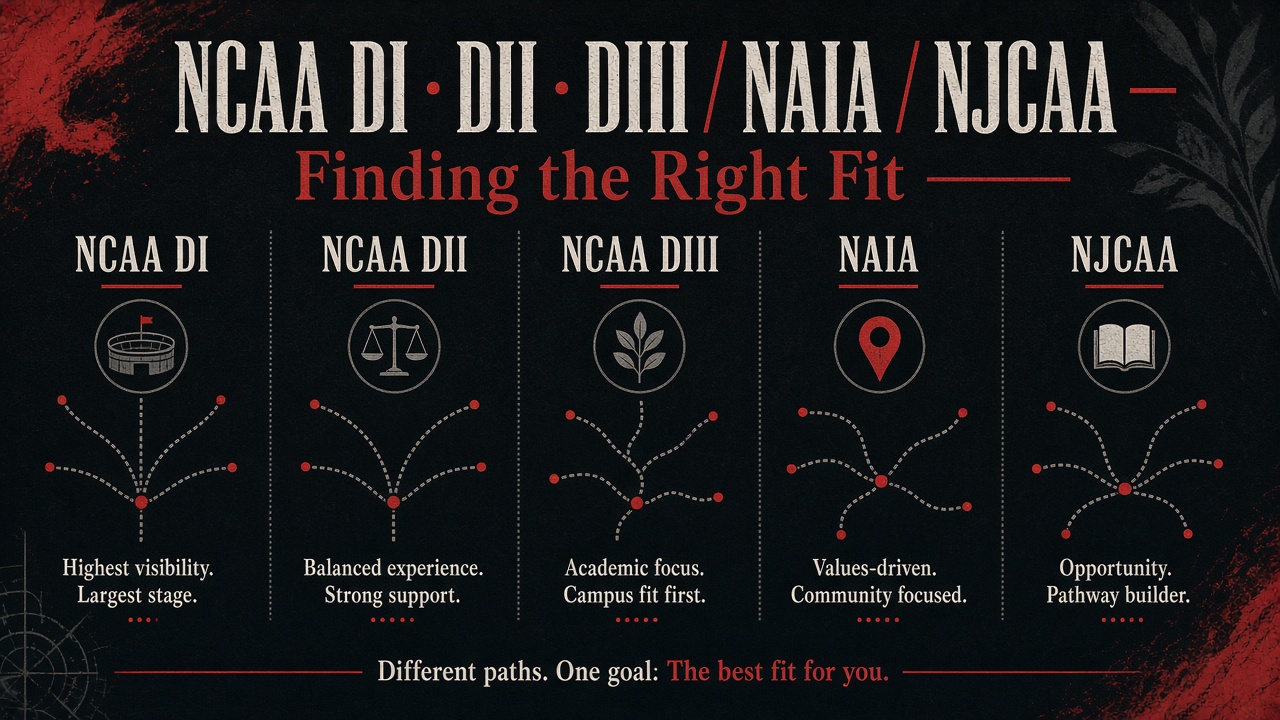
NCAA DI–III, NAIA, NJCAA—Finding the Right Level for Japanese Players
U.S. college soccer is not one association. Still, many default to "just get D1."
Bottom line: pick FIT, not the highest badge. Here's how to tell the five layers apart—and the mismatches that hurt.
There isn't one governing body
NCAA (DI / DII / DIII), NAIA, and NJCAA differ in rules, calendars, aid, and recruiting culture. Daily intensity and academic weight shift with them.
Comparison (ultra-short)
| Sport feel | Academics | Aid (rough) | Often fits | |
|---|---|---|---|---|
| DI | Most spotlight | Hard balance | Athletic possible, limited | High load + strong academics |
| DII | High, often more life balance | More flexible designs | Partial stacks common | Compete + sustainable living |
| DIII | Serious, school-first | Academics centered | No soccer athletic aid | Degree clearly prioritized |
| NAIA | Smaller schools, still serious | Varies | Different system | Strong non-NCAA fits |
| NJCAA | Two-year development | Often transfer-minded | Varies | Bridge to four-year |
Don't choose on aid alone
Money matters—and so do minutes, coaching, major, English environment, town size, and support. Four-year satisfaction is multi-factor.
NJCAA as a designed bridge
When level, academics, or English aren't ready for the four-year target, NJCAA can raise both credits and level before transfer. It's a plan—not a consolation prize.
Classic mismatches
- Jumping too high → no minutes, stalled growth
- Aid-only choice → wrong major/environment burnout
- DI or nothing → missing strong DII/DIII/NAIA fits
- Treating verbal interest as "done" → late level rethink
Next step
Map film + academics to a realistic band via Apply. Lock FIT before school-name hunting.
Your Next Pitch Starts Here.